
Twenty alternators sat in customs for two weeks and two confirmed retail orders were cancelled. The product was fine; the packing list said 18 units, the invoice 20.
Payment starts an international order; it does not finish it. Six stages sit between a supplier's warehouse and a customer's shelf: preparation, packing, export declaration, transit, import clearance and delivery. Any one can delay the rest, and each costs more to fix afterwards than to control before dispatch.
In short
Payment is the start of an alternator import, not the end. Six stages follow — preparation, packing, export declaration, transit, import clearance and delivery — and the cheapest place to fix any of them is before dispatch.
Key points
- Six stages stand between payment and the shelf; the cheapest place to fix a problem is before dispatch.
- Courier, air and sea are not ranked by price — they are matched to volume, urgency and total cost.
- A branded unit with legal origin can still be refused by a carrier; confirm acceptance first.
- Invoice, packing list, AWB or bill of lading and customs data must agree before dispatch.
- Incoterms decide who pays for which leg; with DDP, get the boundary in writing.
1. Before shipment: where delivery risk is actually created
Most delivery failures are created at order confirmation, not in transit: a specification that does not match the order, an address missing a postcode, an importer without the registration the destination requires.
Specification check
Confirm the OE number against the vehicle, the rated voltage, the output current and the structural details — pulley, connector, mounting — plus brand and packaging state. Those fields become the invoice and declaration, so make the proforma invoice the single source. If the reference itself is unclear, start with reading an OE number.
Consignee and import details
Confirm company name, full address, phone and postcode. For a commercial import, establish whether the buyer holds import registration, needs a tax or importer number, and has appointed a broker.
This matters because of how distributors now buy. A buyer who ordered at a toyota dealership parts department or a chevy dealership parts counter used to buy a part already in the country. Direct import — a toyota parts online listing, a dodge dealership parts store, a mazda dealership parts account — removes that layer and hands over the delivery chain, as it does for a hyundai dealership parts or nissan dealership parts buyer.
2. Choosing the transport mode
Volume, destination and urgency decide the mode; compare total delivered cost.
Courier
DHL, UPS and FedEx suit samples, small orders and urgent replacements: good tracking, usually door to door. Confirm remote-area and size surcharges, and whether the carrier accepts the branded product.
Air freight
For larger volumes with a tight window. Air is normally airport to airport, with destination clearance, handling and delivery arranged separately. Check whether origin handling, destination charges and last-mile delivery are included; a rate that excludes the destination side is not cheaper, just incomplete.
Sea freight
The cost advantage appears at volume: a 20-foot container usually holds several thousand 12V passenger-car alternators, depending on model and packing plan. Below that, LCL shares a container and adds humidity and handling risk. Sea involves booking, loading, port handling, clearance and collection — confirm destination charges and local delivery before you commit.

Chargeable weight, and the charges after the freight
Freight bills on the greater of actual and volumetric weight. A 12V alternator weighs 4–8 kg gross, so most shipments bill on actual weight — but carton size still moves the number, as why carton size changes your freight bill explains.
On sea freight the ocean rate is only part of the invoice: expect terminal handling (THC), documentation, clearance, devanning, delivery and storage if the container waits. Have the forwarder list them before booking.
Incoterms: who owns which leg
CIF usually includes minimum marine insurance on the supplier side; the split is whatever the contract says. A "DDP" quote that excludes terminal fees is the most common hidden cost buyers meet.
| Term | Transport | Export clearance | Import clearance | Duty and destination charges |
|---|---|---|---|---|
| EXW | Buyer | Buyer | Buyer | Buyer |
| FOB | Buyer | Supplier | Buyer | Buyer |
| CIF | Supplier | Supplier | Buyer | Buyer |
| DDP | Supplier | Supplier | Supplier | Supplier |
Ask which charges sit outside the term before you compare quotes. A CIF price stops at the destination port; a DDP price should not.
What a catalogue price does not tell you
A price that reads cheap at the quotation stage often stops looking cheap once freight is added. That is why a listing advertising toyota parts online free shipping, or a nissan parts online, subaru parts online, mopar parts online or lexus parts online price, says nothing about the cost of moving a pallet across a border. The same limit applies to catalogue prices: an oem parts online quote — a toyota oem parts online, honda oem parts online or hyundai oem parts online figure — is a domestic delivered price, and a nissan oem parts online or volkswagen oem parts online listing is not a freight quote either. Buyers comparing vw oem parts online and bmw oem parts online numbers, or a lexus oem parts online, subaru oem parts online, mazda oem parts online or acura oem parts online price, are comparing parts, not transport. Landed cost is the number that decides, and landed cost before you compare quotes sets out how to build it.
| Dimension | Courier | Air freight | Sea freight |
|---|---|---|---|
| Best for | Samples, small batches | Medium batches, time-sensitive | Bulk replenishment |
| Typical transit | 3–7 days | 5–10 days | 20–45 days, route dependent |
| Door to door | Usually yes | Airport to airport | Booking plus destination handling |
| Watch | Remote surcharges, brand screening | Whether both ends are included | LCL humidity, destination charges |
3. Branded product and carrier acceptance
Legal origin does not mean every channel will carry the goods. Carriers apply their own acceptance policies for branded products, and destination customs may ask for documents a general auto-parts shipment never needs.
Check three things before packing.
Carrier policy
Ask the actual carrier, not the sales agent, whether the brand is accepted and what documents are needed. A channel that moves unbranded parts may still refuse a Valeo or SEG consignment.
Declaration accuracy
Product name, brand, quantity, declared value and origin must match the goods and the transaction. Under-declaring value or hiding a brand to save freight is how shipments get seized and fined.
Supporting documents
Brand authorisation, purchase evidence or product data may be required. Authorisation, customs requirements and carrier screening are three separate checks.
4. Packaging
An alternator is mechanically strong and electrically fragile at the edges: the B+ terminal, connector and pulley are what arrives damaged.
- Unit protection. Cushioning between housing and carton; caps on the B+ terminal, protection on the connector, wrap on the pulley.
- Internal stability. No movement in the box; units separated so they cannot press on each other.
- Carton strength. Board grade matched to weight and route; palletising and strapping for heavy batches.
- Moisture control. Desiccant and stretch wrap for LCL — a damp carton ruins the unboxing even when the part is intact.
- Marking. Up, keep-dry and fragile marks, with the carton label matching the goods.
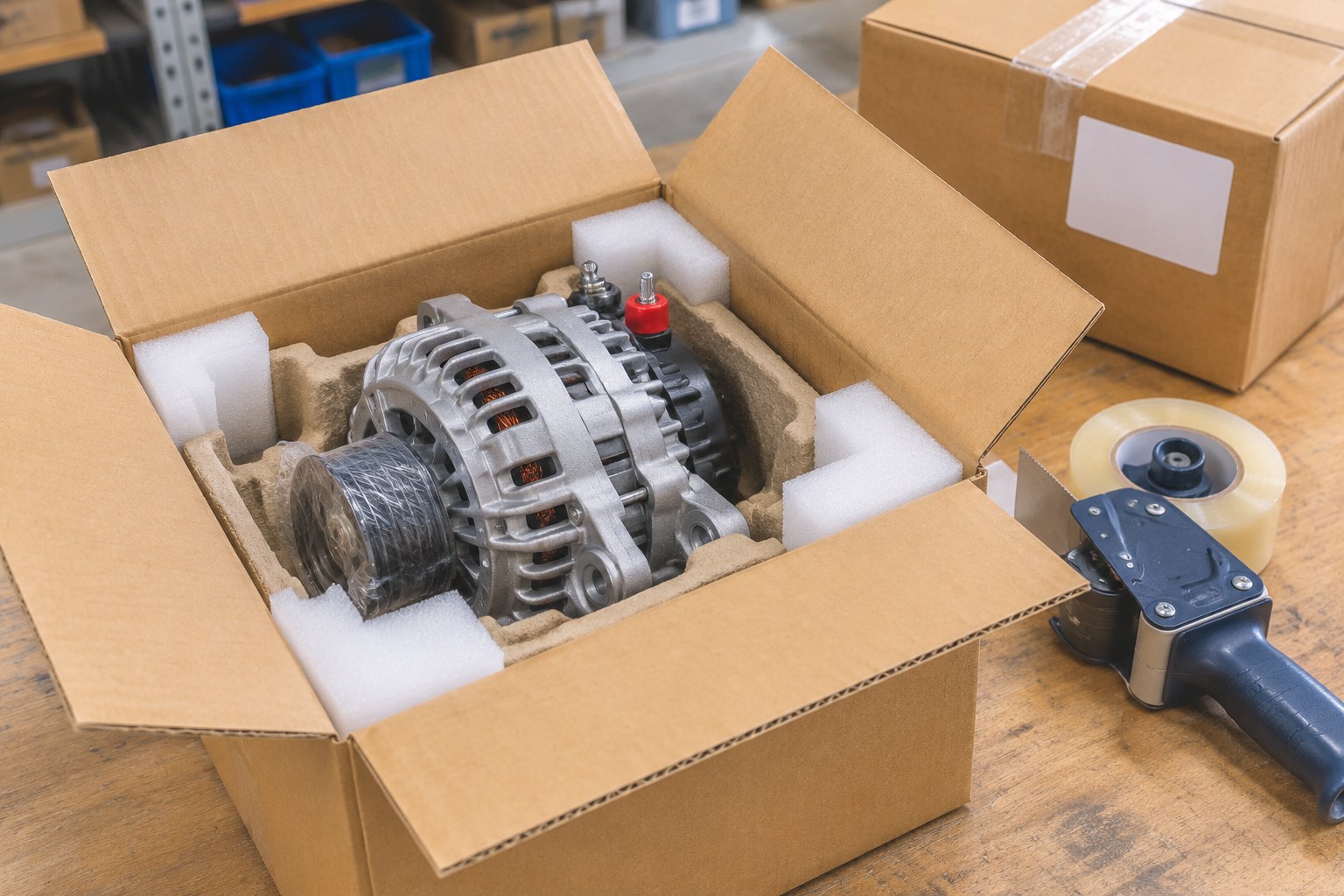
Neutral or branded packaging, custom labels and carton marks belong in the order confirmation; changing them after packing starts is how a shipment misses its booking. Mixed pallets add a second problem — see consolidating a mixed order.
5. Documents and import clearance
Commercial documents are the basis for export, carriage and clearance. The common set for an alternator order:
| Document | Purpose | Common error |
|---|---|---|
| Commercial invoice | Parties, description, quantity, unit price, total, terms | Description or brand not matching the goods |
| Packing list | Carton count, quantity, gross and net weight, dimensions | Piece count differs from what shipped |
| AWB or bill of lading | Carriage record | Consignee differs from the invoice |
| Certificate of origin | Origin evidence where a format is required | Origin declaration inconsistent |
| Supporting files | Authorisation, technical data, import permits | Requested late, after arrival |
The four-document rule: invoice, packing list, transport document and customs data must agree. Twenty units shipped and 18 listed is a hold, not a clerical error.
Before dispatch, check parties, description, OE numbers, quantities, declared value, origin, carton counts, weights and consignee details.
Alternators normally fall under HS 8511, though the subheading, rate and licensing vary by destination; classify against the local tariff. Some markets require pre-shipment conformity work — SASO for Saudi Arabia, SONCAP for Nigeria — with its own lead time.
For high-value or sea shipments, cargo insurance is worth the premium: claims are settled on documents, and a policy makes the claim certain rather than arguable.
6. Lead time and tracking: managing the whole cycle
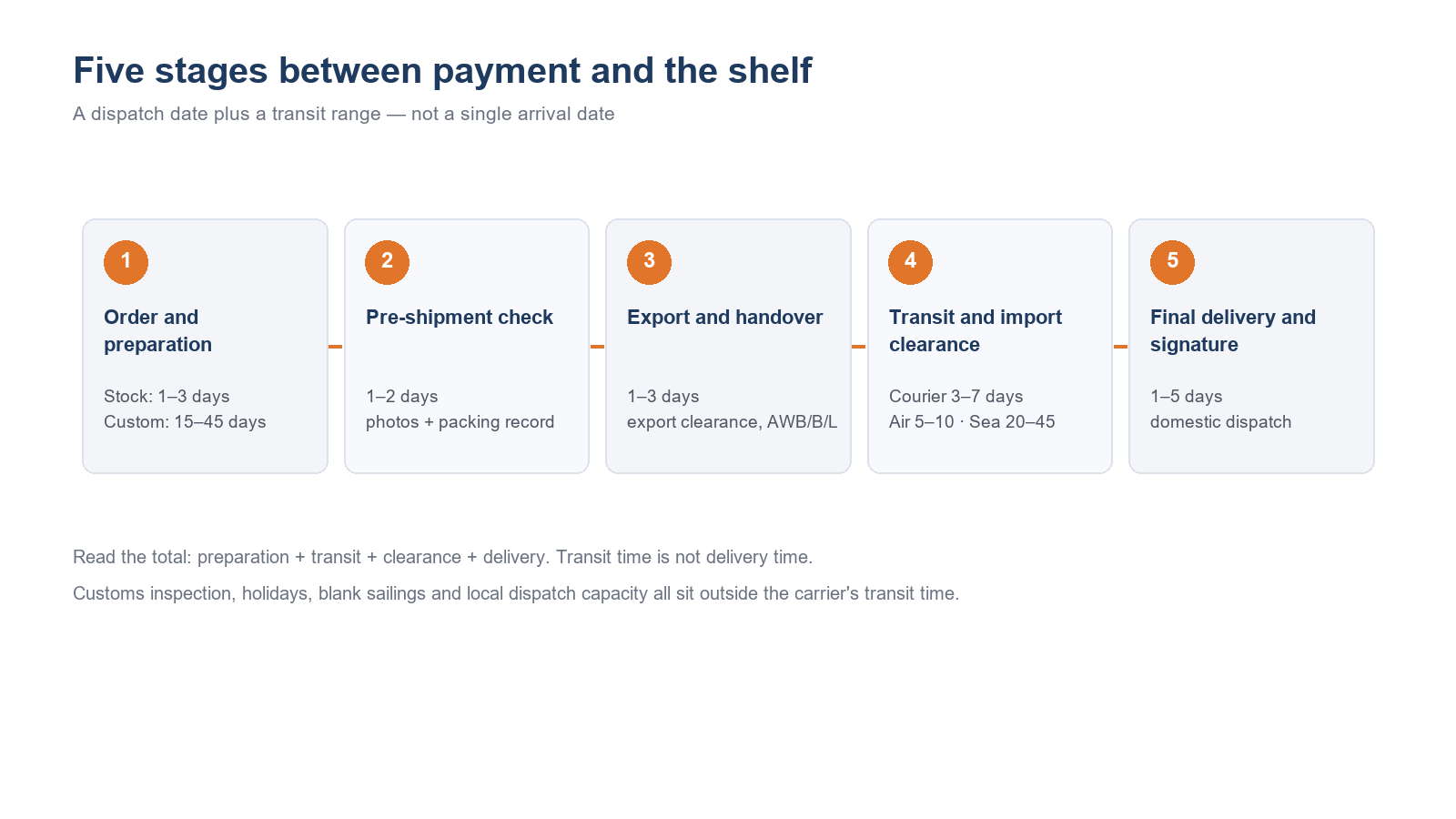
An arrival date without a breakdown cannot be planned against. Split the cycle into five stages and quote it that way.
Three time concepts
Preparation runs from confirmation to goods ready; transit from carrier acceptance to arrival; clearance and delivery from arrival to signature. A commitment reads: dispatch date plus a transit range, with clearance and delivery as variables.
Customs inspection, holidays, weather, schedule changes and delivery capacity sit outside carrier transit time: transit time is not delivery time.
7. When something goes wrong
Carrier refuses the branded goods. Usually an acceptance policy or a missing document. Confirm with the carrier before packing; then establish the exact requirement and rebook — do not resend on the same channel.
Customs holds the shipment. Usually an incomplete declaration, wrong consignee data or an inspection. Prevention is the four-document rule; on a hold, get the specific requirement from the broker and supply documents the same day.
Transit runs long. Schedule changes, congestion, holidays. Buffer the plan, never over-promise downstream, and give the customer a factual update rather than a new guess.
Damage on opening. Keep pre-shipment photos and packing records. Collect photos of the outer carton, inner packaging, damage and carrier label, compare with the pre-shipment record, then follow the carrier claim rules — every claim has a deadline.
8. Pre-shipment checklist for buyers
Whether the enquiry replaces a bmw parts online supplier, a hyundai parts online account, a mazda parts online order, an audi parts online order or a jeep parts online basket, the checklist is the same.
| Item | Confirm | Owner |
|---|---|---|
| Product | OE number, brand, model, quantity, configuration | Both |
| Consignee | Company, address, phone, postcode | Buyer, checked by supplier |
| Import requirements | Importer entity, tax number, special permits | Buyer |
| Terms | EXW/FOB/CIF/DDP and the cost boundary in writing | Both |
| Mode | Courier, air or sea, compared on total cost | Both |
| Brand acceptance | Carrier policy and required documents | Supplier |
| Packaging | Terminal, connector and pulley protection, moisture control | Supplier |
| Documents | Invoice, packing list and AWB/B/L consistent | Supplier |
| Charges | Freight, destination charges, duty, delivery | Both |
| Timeline | Preparation, transit, clearance and delivery ranges | Supplier |
| Dispatch record | Product photos, packing photos, tracking | Supplier |
Done before booking, this list is what keeps a consignment out of a customs queue. The fitting side is covered in six parameters to check before ordering.
9. FAQ
Courier, air or sea — which is cheaper?
Sea is cheapest per unit at volume, courier at sample size; the honest answer is the lowest total delivered cost for your quantity and deadline. Alternators are dense cargo, so courier and air shipments usually bill on actual weight.
DDP or CIF — who clears customs?
Under CIF the supplier ships to the port and clears export; import clearance and duty stay with the buyer. Under DDP the supplier delivers to the door and pays duty — confirm in writing that destination charges are included.
What HS code applies to alternators?
Normally HS 8511, with subheading, rate and licensing depending on destination. Classify against the local tariff.
What documents does a Valeo or SEG shipment need?
Invoice, packing list and transport document as a baseline, plus brand authorisation where the carrier or destination asks. Carrier acceptance is a separate check from customs.
The carton arrived damaged — what now?
Photograph the carton, inner packaging, damage and carrier label, keep the packaging, notify the carrier within its claim window, and send the file to the supplier.
How different are clearance rules between markets?
Enough that experience does not transfer: the US scrutinises declared value, the EU needs an EORI-registered importer, Saudi Arabia may require SASO, Nigeria applies SONCAP, and South American clearance times vary widely.
10. Closing
A reliable supplier is judged on delivery as much as product: specifications checked before packing, cartons that survive the route, documents that agree, and a timeline separating dispatch from arrival.
Whether the cargo is a Valeo or SEG consignment or a private-label run, the controls are the same. Send your OE list and destination for a delivery plan and a freight range.
Related parts
Units from our range. Send an OE number and we will check fitment before quoting.
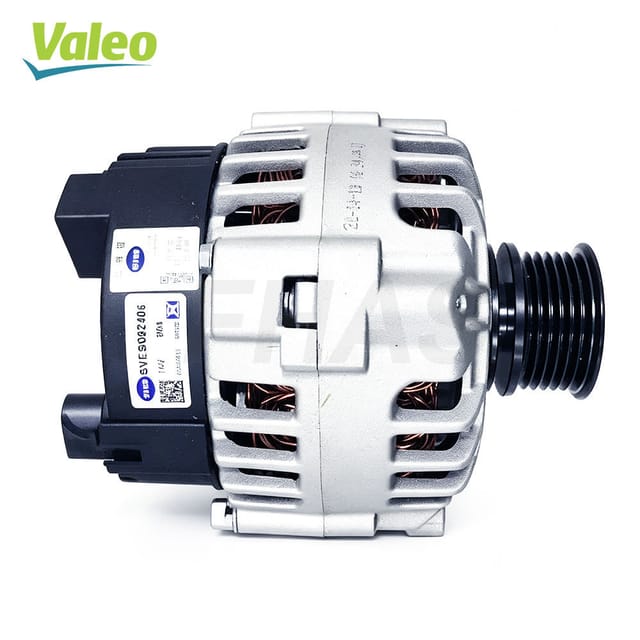 Valeo Alternator 12V 90A for VW Jetta (030903023J)
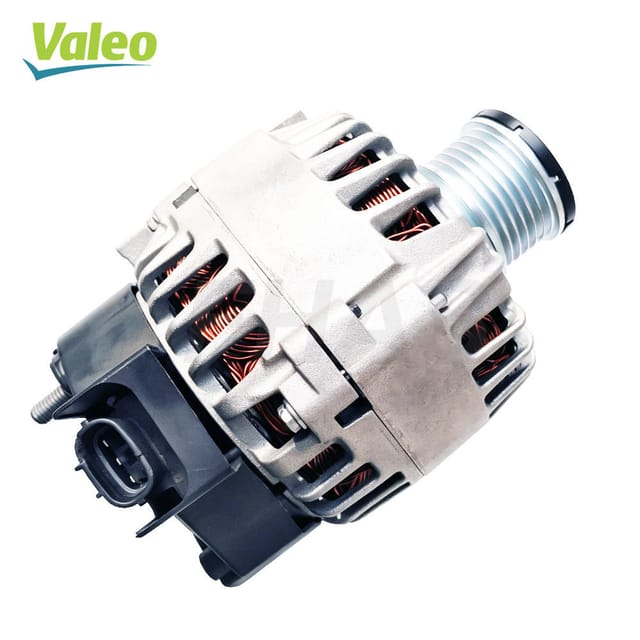 Valeo Alternator 12V 110A for Nissan Sylphy (23100-3RA2B)
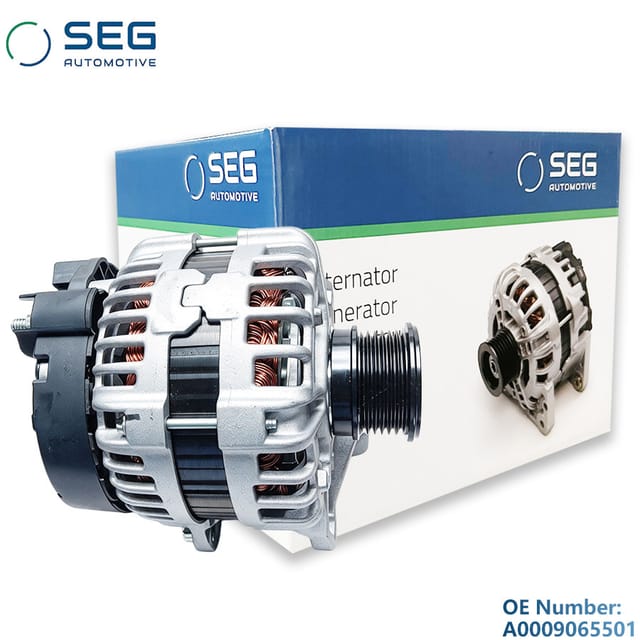 SEG Alternator 12V for Mercedes-Benz GLK 250 (A0009065501)
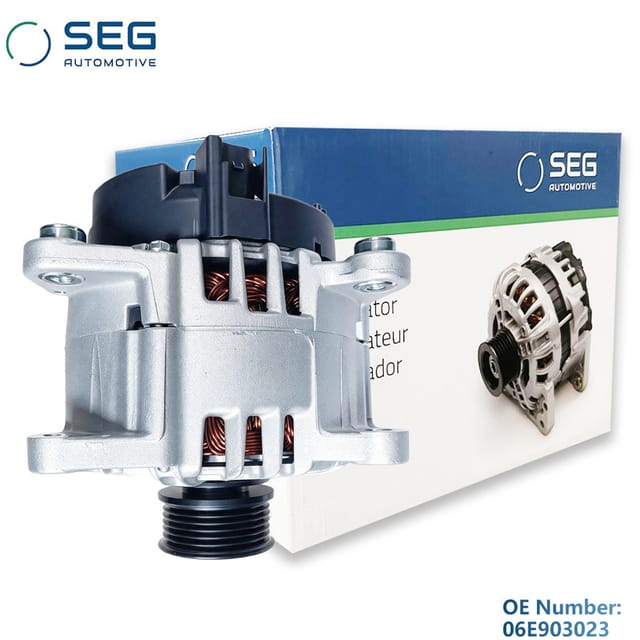 SEG Alternator 12V for Volkswagen Touareg 3.0 TSI 2010 (06E903023)
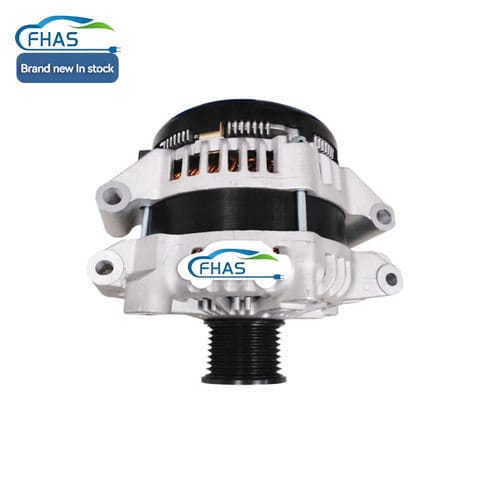 JHAEM Alternator 12V 210A for BMW 523 / 528 / X3 3.0
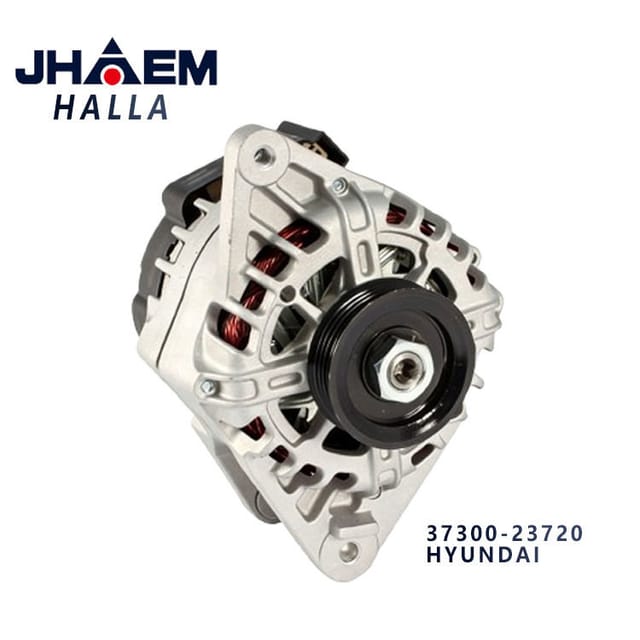 JHAEM Alternator 12V 90A for Hyundai / Kia
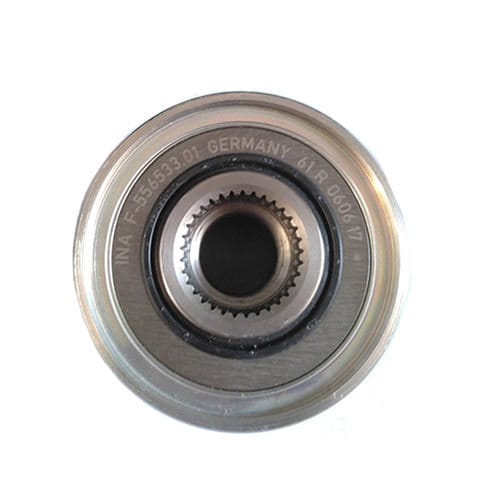 INA Freewheel Pulley Clutch F-556533.01 for Mini 1.6T
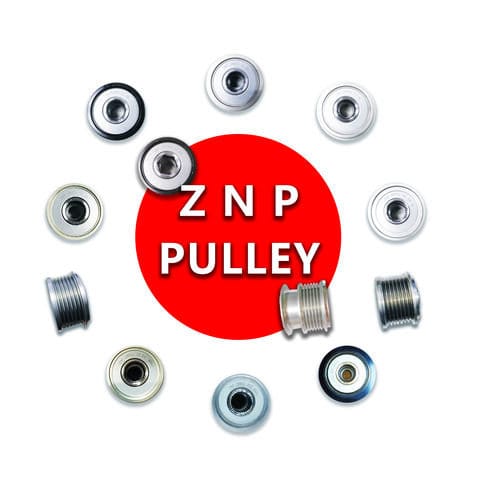 ZNP Alternator Pulley for Citroen / Peugeot / Suzuki / Opel
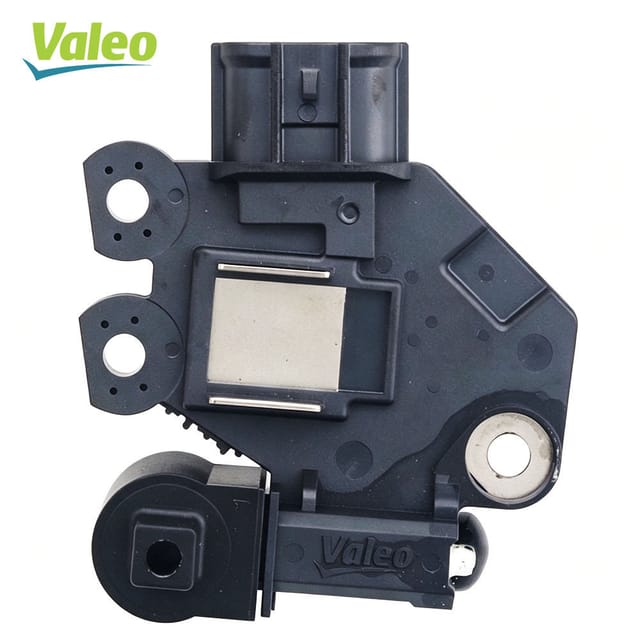 Valeo Voltage Regulator 12V for Hyundai / Kia (2614507)
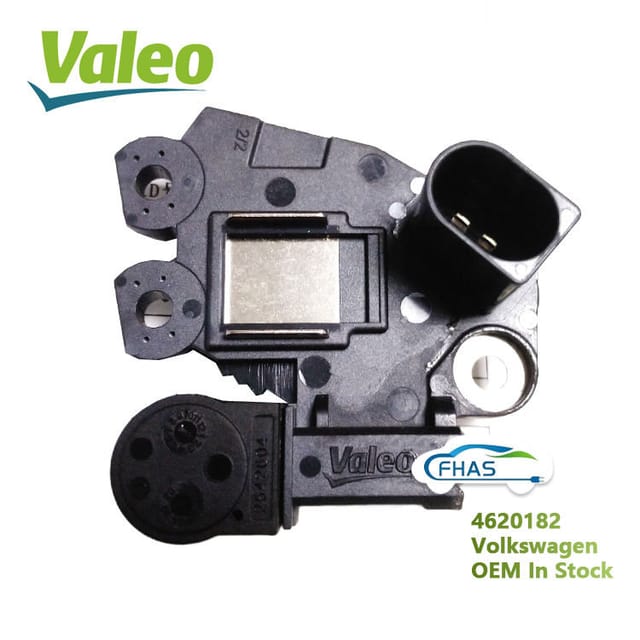 Valeo Voltage Regulator for Volkswagen
Have a part number to price?
Send it over with the quantity and destination. You will get a fitment check, a unit price and a freight cost — usually the same business day.